Technical Basics, Safety & Care
Real-World Power Bank Capacity: mAh to Device Charges
10th May•9 min read
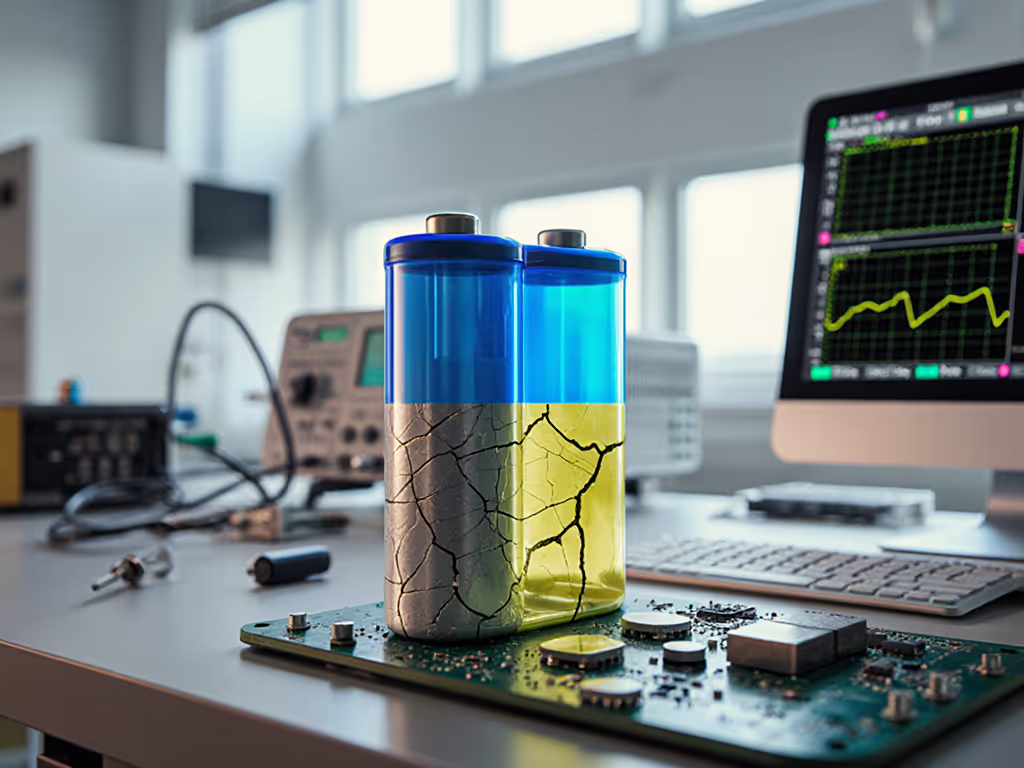
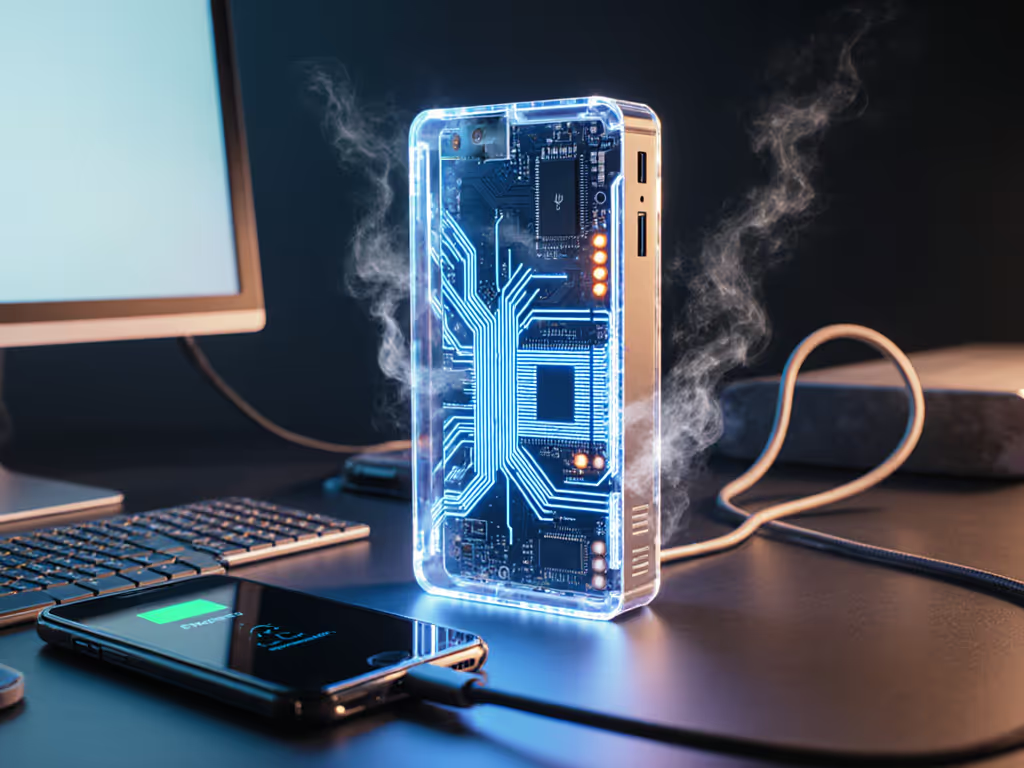
Power bank capacity degradation is not a flaw, it is power bank lifespan science in motion. Every time you charge and discharge a lithium-ion cell, internal chemical reactions slowly reduce the amount of energy it can store. Understanding what drives this degradation helps you make smarter decisions about which banks to buy, how to use them, and what to expect over time.
The math is clear: a quality power bank typically operates at acceptable capacity (80% or higher) for 200-500 cycles, depending on battery chemistry, temperature, and how you charge it. After that, gradual capacity loss accelerates. But you can stack the odds in your favor by learning the mechanisms at work and adjusting your behavior accordingly.
When you first charge a lithium-ion battery, a protective layer called the solid electrolyte interphase (SEI) forms on the anode surface. This is intentional: the SEI protects deeper electrode material from damage. But there is a catch, it does not stay thin. As you cycle the battery, this layer thickens over hundreds of charge-discharge events, eventually growing from nanometers to micrometers.
As the SEI thickens, it traps lithium ions inside the layer, making them unavailable for energy storage. Elemental mapping of aged batteries shows increased deposits of lithium, oxygen, and fluorine in the SEI, confirming that ongoing chemical changes directly degrade performance. In advanced anodes (such as those with silicon), this degradation can reach 50% loss of active material volume after just 300 cycles.
The thicker the SEI layer, the fewer lithium ions remain mobile and available for charging and discharging your devices.
Lithium plating occurs when lithium ions deposit as metallic lithium on the anode, instead of inserting into the electrode material. This is especially common during fast charging at cold temperatures. Unlike the reversible capacity loss from SEI growth, lithium plating creates irreversible damage: it consumes active lithium, damages the SEI further, and can become electrically isolated (so-called "dead lithium"), permanently removing it from the energy cycle.
Experimental imaging confirms that metallic lithium becomes trapped and unreachable, contributing to capacity fade even after you optimize charging later.
Over time, the active materials in both the cathode and anode break down, dissolve into the electrolyte, or lose mechanical contact with the current collector. These structural changes increase internal resistance and reduce the number of charge-carrying sites available to lithium ions. The result: lower capacity and slower charge acceptance.
Inside the cell, the liquid electrolyte is not inert. It gradually breaks down through chemical reactions, losing lithium inventory and consuming its own molecular structure. These side reactions also generate gases and transition metal ions, which trigger further chemical cascades that damage both electrodes and increase internal resistance.
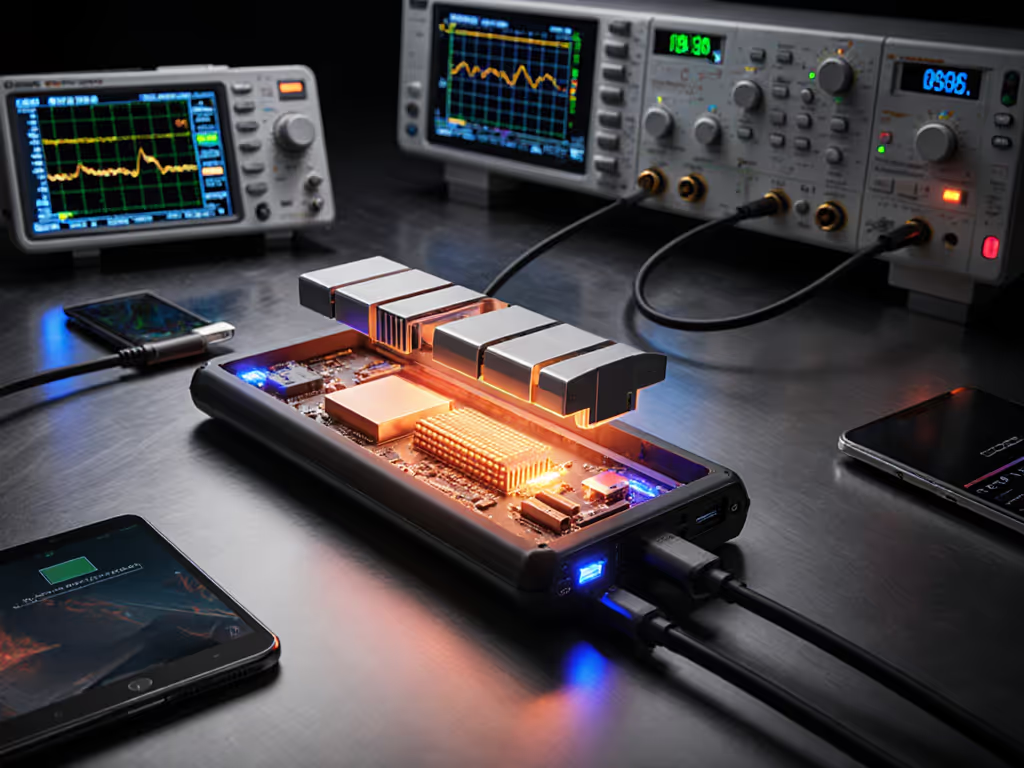
Temperature dominates degradation rates. For deep data on cold and heat effects, see our temperature performance analysis. Research shows that at room temperature (25°C), typical degradation is 0.005% per hour (the baseline). But expose the same battery to high heat (above 35°C / 95°F), and degradation accelerates to 0.07% per hour, or 14 times faster.
Cold temperatures are deceptive. While they slow some chemical reactions, they drastically increase lithium plating and "dead lithium" formation, especially at higher discharge rates. A battery cycled at low temperatures can accumulate more irreversible damage per cycle than one at room temperature, even if the degradation appears slower in real time.
| Temperature | Capacity Loss Trend | Key Mechanism |
|---|---|---|
| 0°C | Slow (per hour) | Minor SEI growth, but high lithium plating risk |
| 25°C | Moderate (baseline) | Balanced SEI and plating |
| 40°C | Fast | Accelerated SEI growth and plating |
Actionable insight: Store power banks in cool, dry environments (ideally 15-25°C) away from direct sunlight and heat sources. During travel, keep banks out of hot backpacks and away from laptop exhaust vents.
Fast charging and discharging stress the battery more than slow rates. High currents force lithium ions to move quickly through the electrolyte and electrode, increasing the chance they will deposit as metallic lithium (plating) rather than inserting cleanly into the anode. The faster you push current into or out of a battery, the more internal resistance rises and the more heat is generated.
Partial discharges are gentler than full discharges. Batteries experience less chemical stress during shallow cycles (e.g., charging from 20% to 80% rather than 0% to 100%). If your workflow allows, recharge your power bank when it drops to 20-30% instead of draining it completely. This simple habit can noticeably extend cycle life.
Each charge cycle causes small, cumulative wear. Frequently draining a power bank to 0% before recharging accelerates degradation compared to regular partial cycling. Every charge-discharge event alters the battery's internal structure: tiny cracks form, chemical layers accumulate, and internal resistance creeps upward.
A power bank loses charge even when sitting untouched in a bag. This self-discharge happens because electrons forced into a high-energy state naturally drift back to a lower state over time, it is physics, not a defect. Quality banks have lower self-discharge rates, while budget models may harbor higher leakage currents and less efficient power-management circuits that drain the battery faster while idle.
Temperature accelerates self-discharge. Heat speeds up the unwanted chemical reactions that cause energy loss. This is why a bank stored in a hot car loses charge faster than one in a cool closet.
Given what drives degradation, here is how to maximize usable cycles:
Battery technology is advancing. Solid-state batteries, which use a solid electrolyte instead of liquid, show promise for increased lifespan and safety, though they remain in development. In the near term, selecting a power bank with documented BMS quality, conservative thermal design, and honest capacity specs gives you the best baseline for longevity.
Capacity degradation is inevitable, but it is predictable. When you understand the mechanisms (SEI growth, lithium plating, side reactions, and temperature sensitivity), you can choose equipment that minimizes loss and adjust your charging habits to slow decline. The result is reliable performance across the hundreds of cycles your portable charger will likely see over its useful life.
For deeper dives into power bank selection, cable compatibility, and scenario-specific recommendations, explore resources that pair verified delivery capacity with protocol-first guidance. Knowledge of how degradation works is the first step; applying it to your specific device ecosystem and travel patterns is the path to confidence.