Technical Basics, Safety & Care
Power Bank History: From Bulky Prototypes to PD Precision
11th Dec•7 min read
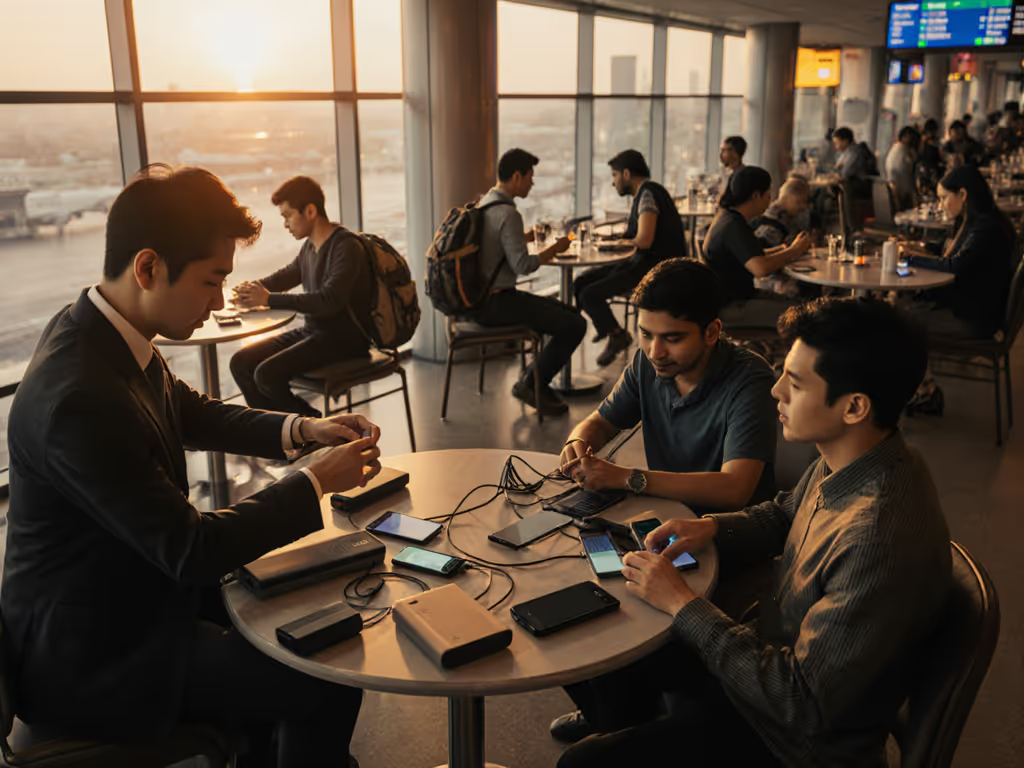
Understanding global power bank usage reveals how cultural charging habits shape our relationship with portable power worldwide. As someone who's mapped thousands of device-bank combinations, I've learned that what happens between your device and its power source isn't magic, it is engineered negotiation. The cable isn't just an afterthought; it's a critical component determining whether your phone charges at 5W or 45W. To understand which fast-charging protocols your devices actually use, see our PD vs QC comparison. When a friend's new phone would only trickle-charge from a 'fast' bank until I swapped in an e-marked cable, it underscored my core belief: compatibility is designed upstream. Choose the right cable and negotiation becomes predictable. Predictable negotiation beats luck.
Market data tells a clear story about where and how power banks are used. The global power bank market is valued at approximately $12.4 billion in 2025 and is projected to grow to $20.6 billion by 2032, with a robust CAGR of 7.4%. Notably, Asia Pacific dominates this market, accounting for approximately 43.89% of global revenue in 2024, driven by China, India, and Southeast Asia's tech-savvy youth populations. These regions show a clear preference for mid-range capacities (8,001-20,000 mAh), which balance portability and multi-device charging (perfect for students and frequent travelers).
The regional charging preferences go deeper than capacity choices. In Japan, power banks are often designed with minimalist aesthetics and pocket-friendly dimensions, reflecting cultural values of compactness and precision. Meanwhile, European travelers prioritize airline-compliant capacities (under 100Wh) with multiple USB-C ports for cross-border compatibility. For rules, limits, and packing tips, read our airline compliance guide. North American users show a preference for high-wattage banks (65W+) that can power both phones and laptops, supporting the remote work culture.
International power bank trends reveal something fascinating: the 8,001-20,000 mAh range dominates globally with an estimated 69% market share by 2025. This isn't coincidental. It represents the sweet spot where portability meets practicality across cultures. When analyzing these usage patterns, I always diagram the negotiation paths between devices and power sources to predict actual performance, not just marketing claims.
Cultural charging habits stem from infrastructure, lifestyle, and device ecosystem differences. In India and Southeast Asia, where power outages are common and smartphone adoption surged to 76% in 2022 (projected to reach 94% by 2030), power banks aren't luxuries, they are essentials. Users often carry multiple banks with different capacities, creating a layered backup system against unreliable grid power.
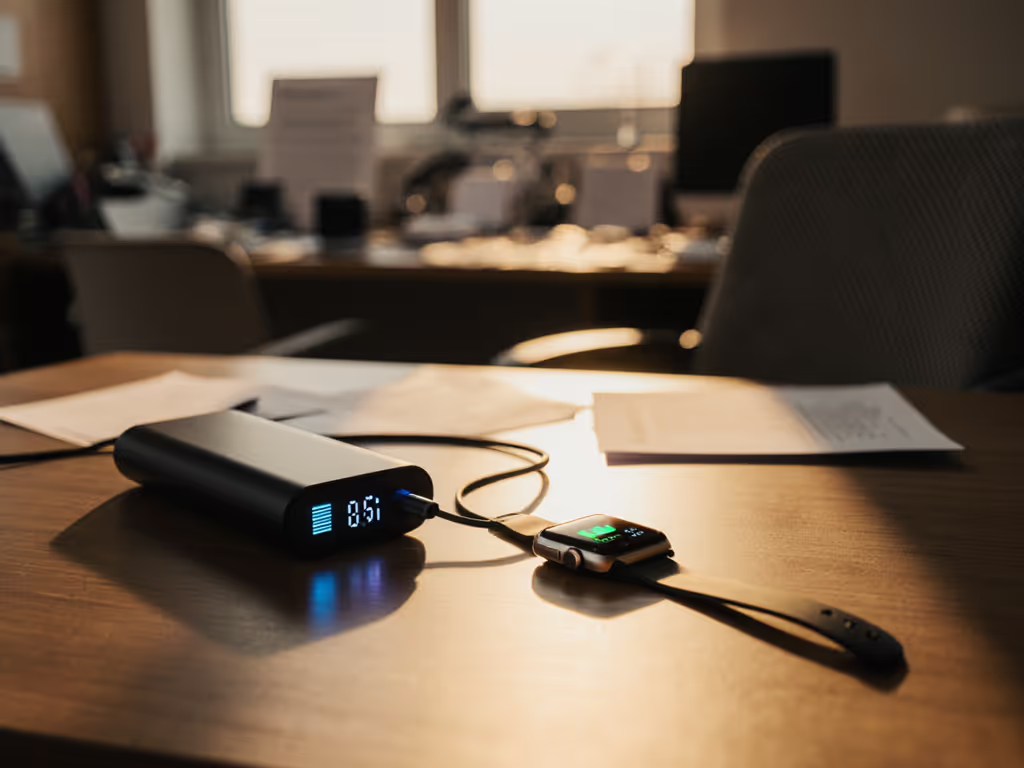
In contrast, Scandinavian countries show higher adoption of solar-integrated power banks, reflecting environmental consciousness and longer daylight hours during summer. Before relying on panels, check our solar power bank truth. I've noticed Europeans frequently use power banks with LED indicators showing precise percentage remaining, a cultural preference for transparency over the "battery bar" approximations common elsewhere.
Japanese consumers exhibit unique power bank etiquette worldwide: compact banks with precisely 10,000mAh capacity (aviation-friendly) are standard, often kept in designated pockets of bags rather than casually tossed in. Meanwhile, in Brazil and Mexico, dual-output banks with both USB-A and USB-C ports dominate, as users frequently share power between friends and family members.
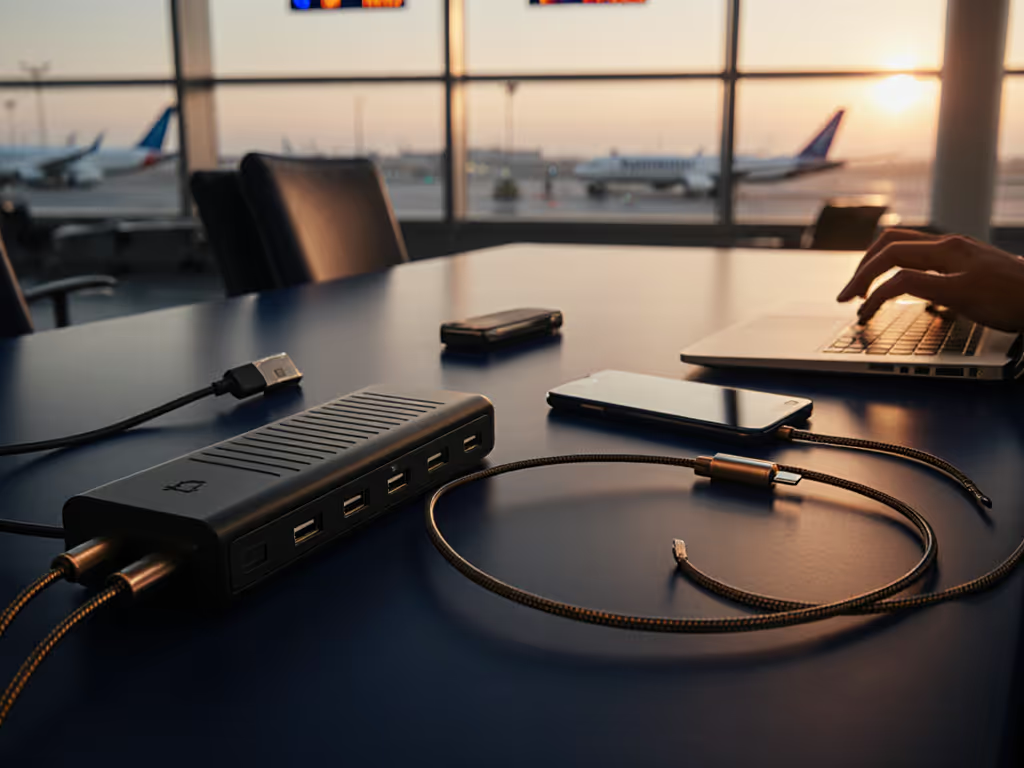
These country-specific charging solutions reveal how local contexts shape technology adoption. When mapping these patterns, I pay special attention to port and cable labels that determine whether fast-charging protocols actually engage. A bank might promise 65W output, but without the right cable infrastructure, that promise remains unfulfilled.
Behind cultural preferences lie technical realities that determine whether fast charging actually works. Samsung's PPS (Programmable Power Supply) protocol, dominant in South Korea and increasingly worldwide, requires specific e-marker verification in USB-C cables to reach 25W or 45W charging speeds. Many users in Europe and North America unknowingly use non-e-marked cables, limiting their Samsung devices to standard 15W charging despite having capable power banks.
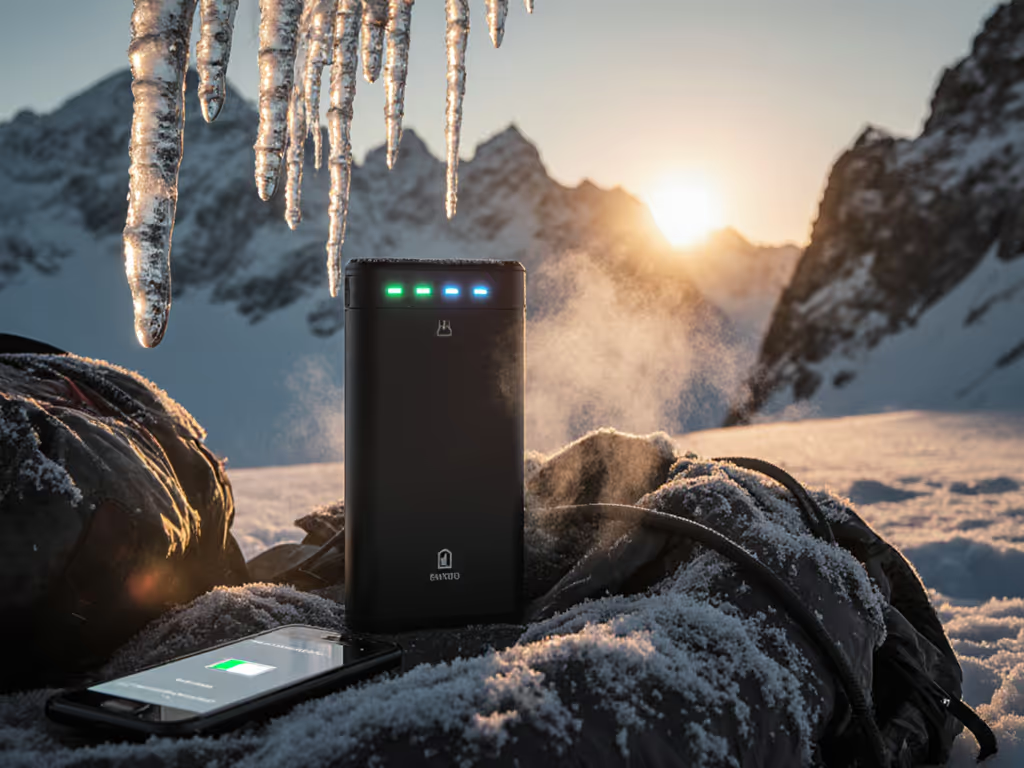
In China, unique charging protocols like Huawei SCP and OPPO VOOC thrive alongside standard USB-PD, creating a complex ecosystem where "universal" power banks often fail to deliver advertised speeds. Japanese manufacturers frequently implement proprietary current limiting below 10°C to prevent battery damage, a feature that frustrates winter travelers who expect consistent performance. See our data on cold-weather efficiency.
The cable is a component, not an accessory, and this truth explains many regional performance gaps. When analyzing power bank etiquette worldwide, I create clear diagrams showing negotiation paths between devices and power sources. For instance, many Android devices in APAC regions will only trigger 25W+ charging when connected to a power bank with Samsung's PPST marker, while iPhones require precise PD 3.0 compliance for 27W charging.
Device-specific notes matter: A power bank that works flawlessly with Samsung phones in Seoul might underperform with iPhones in New York due to subtle protocol differences. That's why when I recommend power banks for travel, I pair them with the exact cable specifications needed to unlock their full potential (because predictable negotiation beats luck).
The key to successful international travel with power banks is understanding regional protocol landscapes. Rather than carrying multiple banks, select one versatile unit with clear USB-PD 3.1 compatibility and matching cables. When I'm traveling, I carry a single high-quality bank with USB-PD 3.1 EPR (Extended Power Range) support up to 100W, paired with verified e-marked cables labeled for specific wattages (28/48/60/100W).
For country-specific charging solutions, research local protocols before traveling: If you're crossing voltage regions, our voltage compatibility guide clarifies what actually changes and how to prepare.
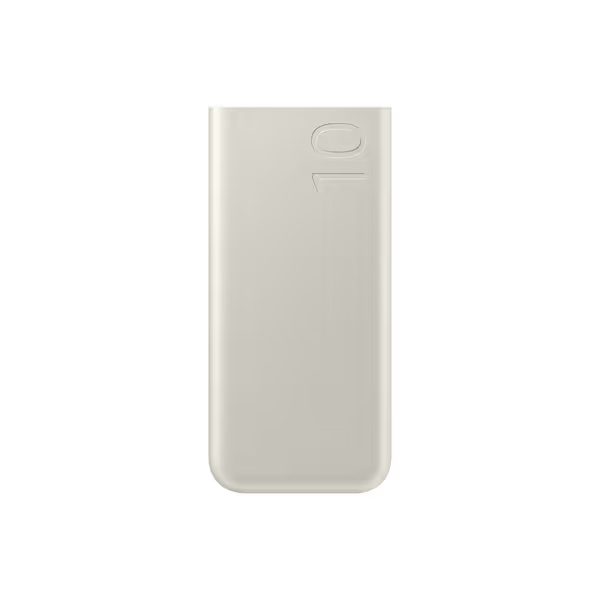
When traveling, create a simple compatibility matrix for your devices:
Many travelers experience the "trickle-charge problem" I described earlier, believing they have a fast-charging setup when cable limitations prevent protocol negotiation. Checking cable specifications takes 30 seconds but prevents hours of frustration. I always emphasize that proper cable selection is often the missing link in achieving reliable global power bank usage.
As we navigate an increasingly mobile world where the average person carries 1.75 devices daily, understanding the interplay between culture, infrastructure, and technology becomes essential. The global power bank market's growth reflects our universal need for reliable power, but regional differences teach us that one-size-fits-all solutions rarely work. Whether you're a digital nomad crossing continents or a commuter navigating daily power needs, remember that your charging experience is shaped by more than just battery capacity, it is determined by the entire negotiation chain from power source to device.
For those looking to deepen their understanding of international power bank trends, I recommend researching specific USB-C certification requirements for your destination countries and verifying your cable's e-marker specifications. The most reliable travel setups combine technical awareness with cultural understanding, creating predictable charging experiences anywhere in the world. When you respect the engineered nature of power delivery systems, you move beyond luck to reliable performance.