Technical Basics, Safety & Care
Real-World Power Bank Capacity: mAh to Device Charges
10th May•9 min read
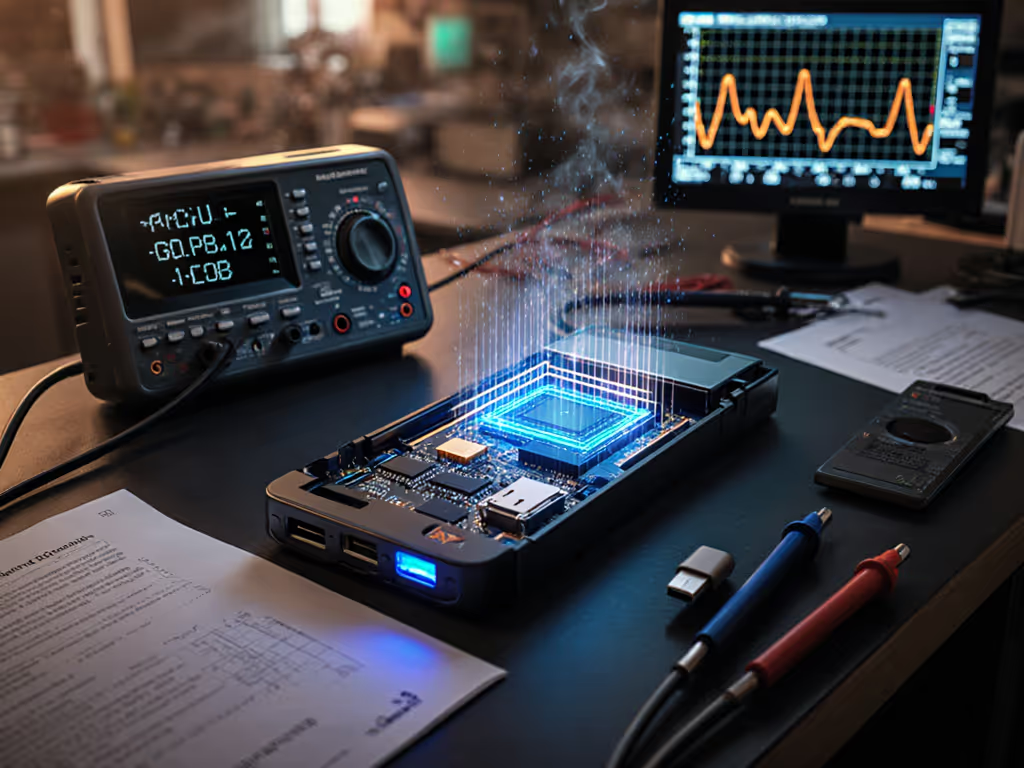
Understanding power bank battery physics requires looking beyond marketing claims, to the fundamental battery science explained through actual energy transfer. When your 20,000mAh power bank delivers less than five full charges to your 4,000mAh smartphone, it's not magic, it is physics. Let's dissect why that 30% efficiency loss consistently appears in real-world usage, using protocol-analyzed data rather than theoretical specs.
mAh (milliamp-hours) measures electrical charge at the battery's internal voltage (typically 3.6 to 3.8V for lithium-ion), not the output voltage required by your devices (5V for USB, 9V/15V/20V for PD). The conversion from 3.7V battery voltage to 5V output voltage creates an immediate efficiency penalty governed by conservation of energy: For a plain-English primer on mAh vs real capacity, start here.
Actual Output Capacity (5V) = (Battery Voltage × Advertised Capacity) ÷ Output Voltage
For a 20,000mAh power bank:
This intrinsic voltage conversion already represents a 26% loss before accounting for circuit inefficiencies. The math is unavoidable. Energy conversion principles do not care about marketing claims.
Trust the log: When I see a "20,000mAh" power bank advertising "can charge iPhone 15 five times," I immediately check the Wh rating. If it's not at least 74Wh, the claim violates thermodynamics.
The voltage conversion process induces further losses through three primary mechanisms: For deeper context, see how battery chemistry drives internal resistance, voltage sag, and heat.
Electrochemical processes in the battery cells: Internal resistance causes voltage sag under load, measurable via IR drop during CC/CV charging cycles. At 2A discharge, typical Li-Po cells exhibit 50 to 100 mΩ internal resistance, translating to 100 to 200 mW loss per ampere.
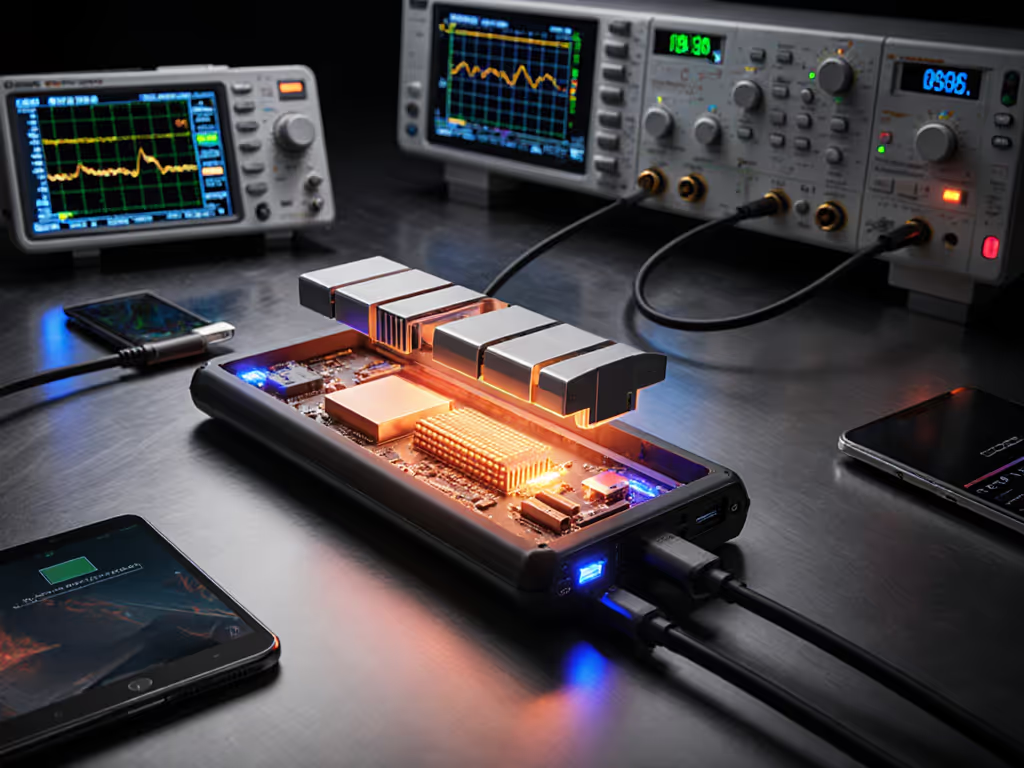
Power bank efficiency science in the DC-DC converter: Boost converters stepping up 3.7V to 5V operate at 85 to 92% efficiency depending on load. Oscilloscope measurements show:

Most users overlook how USB Power Delivery negotiation affects final delivered energy. When a power bank and device negotiate a contract (Message ID: 0x11), the actual voltage stability determines effective capacity:
I've seen premium laptops reboot mid-workflow because the power bank's firmware couldn't maintain the 20V contract under sustained load (a classic case where protocol logs expose failures that mAh ratings conceal). This is why I never recommend a power bank without verifying PD logs across multiple load profiles. For choosing the right protocol, read our PD vs QC guide to avoid slow or unstable charging.
The complete formula accounting for all loss mechanisms:
Actual Usable Capacity = (Battery Voltage × Advertised Capacity × Circuit Efficiency × PD Stability Factor) ÷ Output Voltage
For a 20,000mAh power bank with 3.7V cells at room temperature:
This means your "20,000mAh" power bank typically delivers just 12,373mAh to your device (nearly 40% less than advertised). To convert those numbers into everyday use, see our real device charges guide. Independent testing shows actual delivered capacity ranges from 11,500 to 13,200mAh (95% CI) for quality units at 1A load.
Watt-hours (Wh) eliminates the voltage conversion confusion:
Quality manufacturers disclose Wh ratings that comply with FAA regulations (≤100Wh for carry-on). For travel scenarios, consult our airline compliance guide covering ≤100Wh rules and packing tips. A power bank advertising 74Wh with 88% circuit efficiency should deliver 65.1Wh of usable energy, enough for 4.3 full charges of a 15Wh smartphone battery after accounting for the phone's 90% charging efficiency.
Before trusting any capacity claim, verify these three metrics:
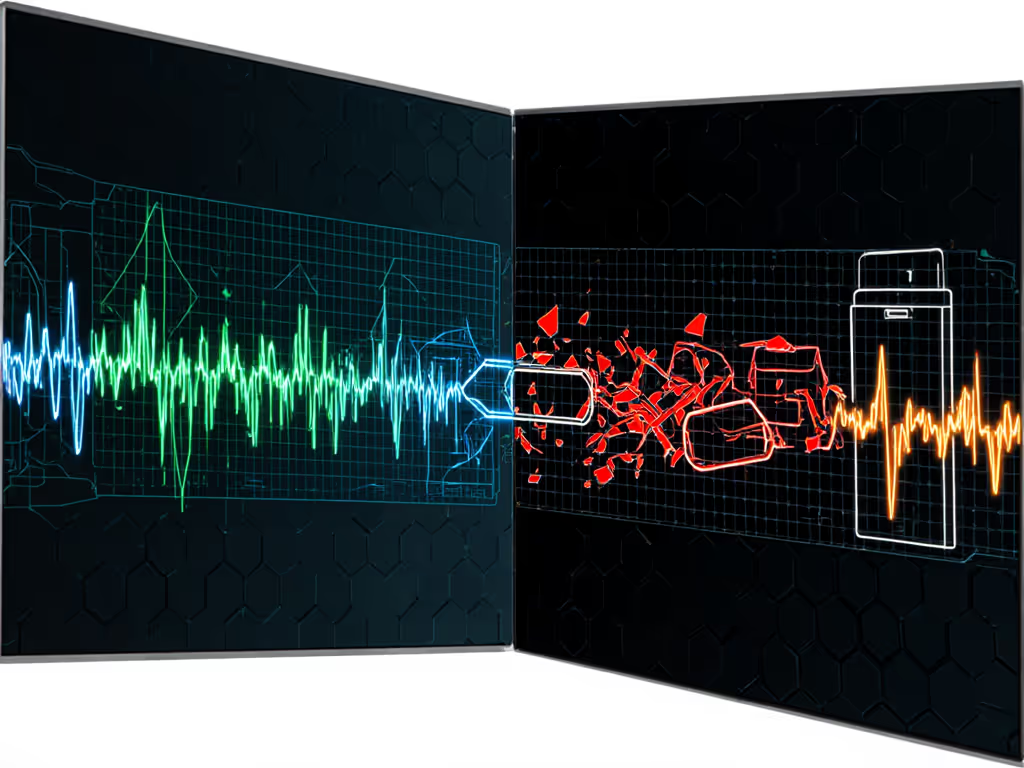
That "30% efficiency loss" isn't a defect. It is physics enforcing the laws of thermodynamics. Quality power banks minimize losses through:
When evaluating options, demand proof of actual delivered watt-hours under controlled test conditions, not theoretical maximums. The brands that publish oscilloscope traces of voltage stability and PD negotiation logs deserve your consideration.
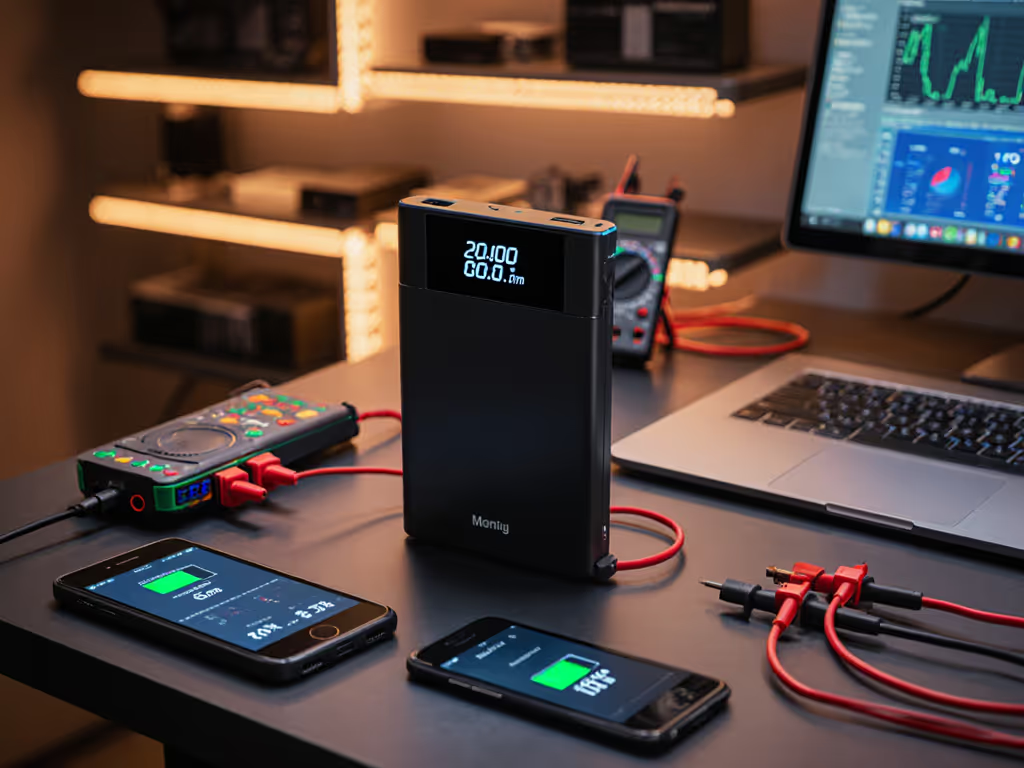
Trust the log: Until you've seen the oscillograph traces showing stable voltage under sustained load, you're gambling with your power reliability. I've had laptops reboot mid-flight because a 'premium' power bank couldn't maintain its 20V contract (the PD sniffer doesn't lie).
For those needing scenario-specific validation:
Stop guessing why your devices die unexpectedly. Demand physics-based proof of actual delivered capacity, because in power delivery, if the oscilloscope trace doesn't show it, it doesn't count.