Technical Basics, Safety & Care
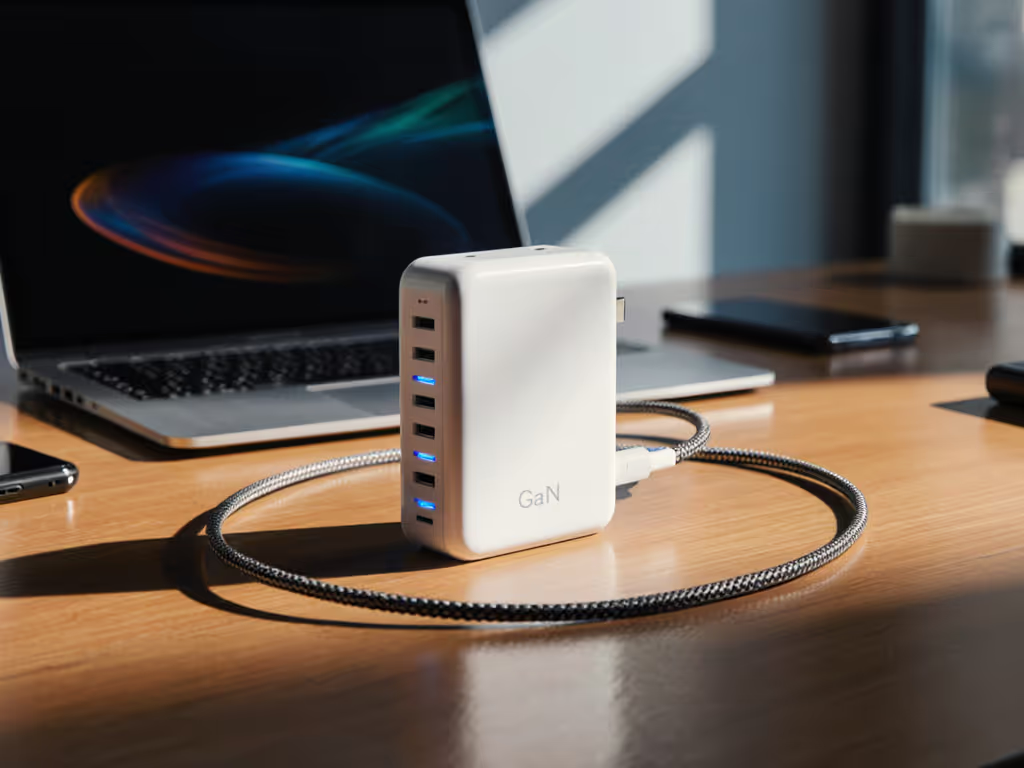
GaN Chargers Explained: Compact Design Meets High Power
23rd Feb•8 min read
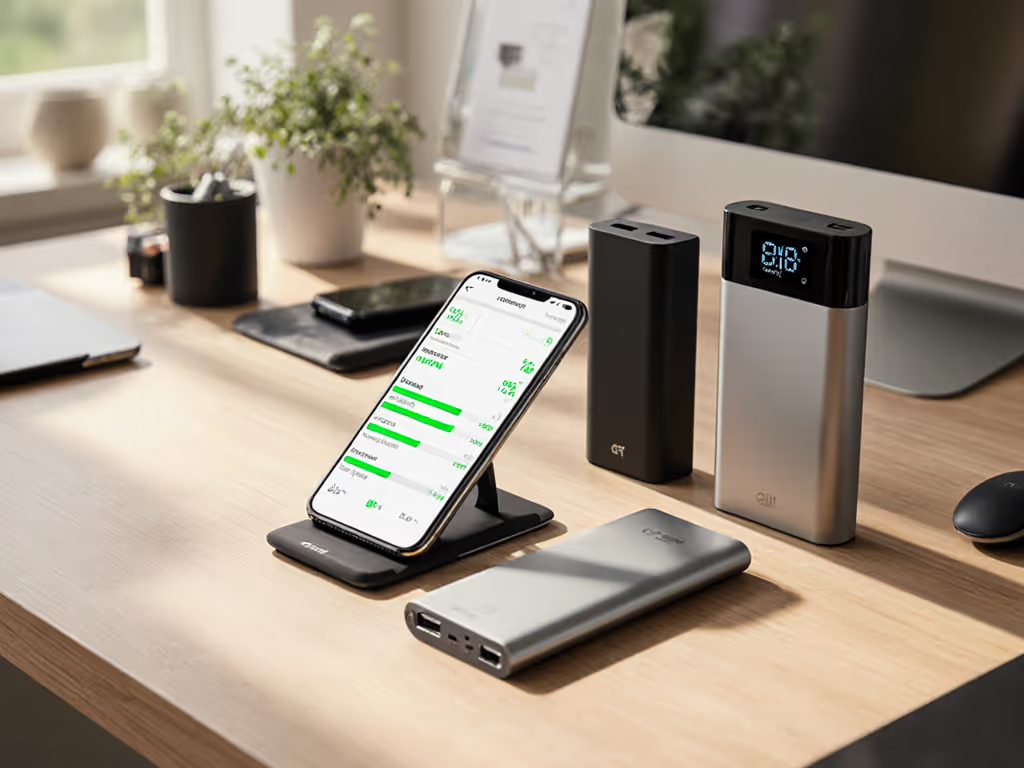
Your smartphone battery faces real threats, but not all of them come from the power bank charging effects on the battery itself. The myth persists that portable chargers inherently degrade lithium-ion cells, yet data tells a different story. After years of tracking which practices actually preserve smartphone battery health, I've found that the culprits (overcharging, heat, unstable voltage) matter far more than the charging source itself. This article cuts through the spec-sheet traps and focuses on five measurable, repeatable practices that keep your battery healthy while using power banks daily.
The foundation of safe charging is non-negotiable: your power bank must deliver consistent voltage and current. Certified banks output stable 5V/2A, 5V/3A, or PD-rated profiles (9V/2A, 15V/2A, 20V/3A). Cheap units fluctuate, stressing your cell chemistry. This stability is what separates a deliberate investment from spec marketing noise. For a deep dive into BMS voltage stability, see our technical comparison.
When I evaluate a power bank for real-world reliability, I verify that it actually holds its rated voltage under load, not just at idle. Lower-grade banks may fail at effective power regulation, and those voltage swings compound lithium-ion battery degradation over time. A certified bank with overcharge protection, short-circuit prevention, and temperature control does the hard work so your battery doesn't. Pair that with a quality cable (e-marked, correct gauge), and you've removed the single largest risk factor in the charging chain.
High-capacity banks (20,000 to 30,000 mAh) are safe if they're engineered to deliver consistent power. I've tested sleek, premium-priced banks that throttled to a fraction of their promised output after five minutes; a cheaper, well-engineered alternative held steady at the correct wattage the entire session. The logs settled it. What matters is stability-adjusted value, not mAh count on a sticker.
Heat is the silent battery killer. Elevated temperature accelerates degradation in lithium-ion cells far more than the charging source itself. The hot sun, a parked car, or even a pillow all quietly erode your battery's lifespan. Modern phones and power banks include thermal protection, but you must respect the fundamentals: always charge in a cool, well-ventilated space. For quantified results across seasons, see our temperature performance data for popular power banks.
If you're using your power bank daily in a warm climate, heat management becomes a cost-per-delivered-Wh reality. A bank that overheats under load or can't vent properly will stress your phone's chemistry and lower the actual energy you extract per cycle. Poor thermal management doesn't just reduce battery longevity; it also signals poor internal design, which often correlates with less stable voltage regulation and weaker component tolerances. Skip charging under blankets or in sealed bags; let both devices breathe.
Optimal charging cycles don't mean you must hit 0 percent before recharging. In fact, avoiding complete discharge lengthens your battery's lifespan. Lithium-ion cells degrade gradually as a function of cycles, not the charging source. The key is to top up your phone throughout the day rather than waiting for it to drain completely.
Partial charges, keeping your battery between 20 and 80 percent most of the time, reduce wear more effectively than counting on any specific charger brand. This practice alone can extend a battery's usable capacity by months or years. If you're travel-heavy or in outage-prone regions, use your power bank for light top-ups and strategic charging sessions, not as a substitute for disciplined battery habits. Your willingness to recharge at 40 percent will outlive any power bank you buy.
Overcharging protection exists in modern phones and quality power banks, but it's not a blank check. Some lower-quality banks may not cease charging once your phone reaches 100 percent, and leaving your device plugged indefinitely stresses the cell. The safest practice: unplug once fully charged.
When evaluating a power bank for daily use, confirm it has certified overcharge prevention and that it regulates voltage to your device's specifications. A power bank that sends too much power or fails voltage control may slowly degrade your battery, especially if you routinely leave your phone on charge overnight. Modern phones have safeguards, but pairing that with responsible unplugging habits (and a charger that doesn't push the limits) compounds the margin of safety. This is where warranty term scoring becomes practical: longer warranties on the bank itself often signal better internal component quality and lower risk of erratic output over time. Compare brand terms and claim outcomes in our 2025 warranty comparison.
Not all power banks suit all phones. Fast-charging protocols (PD, QC, SCP) require compatible hardware; using a mismatched bank may trigger fallback charging modes, generate excess heat, or even damage sensitive devices. To avoid slow charging, use our PD vs QC compatibility guide. Your flagship smartphone, tablet, and handheld each have distinct voltage and current tolerances. A bank labeled "fast charge" isn't universal; it's a specification match problem.
Before routinely using a power bank, verify that its output voltage and current align with your device's needs. Smartphones typically require 5V input with varying currents (1A, 2A, or higher), and laptops need higher power delivery profiles. Selecting a bank that matches your device's specifications guarantees secure charging. This step is non-negotiable: mismatched voltage will accelerate battery wear far faster than a lower-current bank that's correctly spec'd.
A quality power bank won't spoil your smartphone battery. Heat, overcharging, unstable voltage, and mindless charging cycles will. The real value is delivered watt-hours and stable regulation, not coupon codes or buzzwords. Use a certified bank with proven voltage control, manage heat ruthlessly, practice partial charging, and match the bank to your device's specifications. These five practices will preserve your battery's health far more than brand choice or marketing claims ever will. Skip spec-sheet traps, verify stability-adjusted performance, and you'll extend your battery's usable lifespan by months or years, far outlasting the power bank itself.